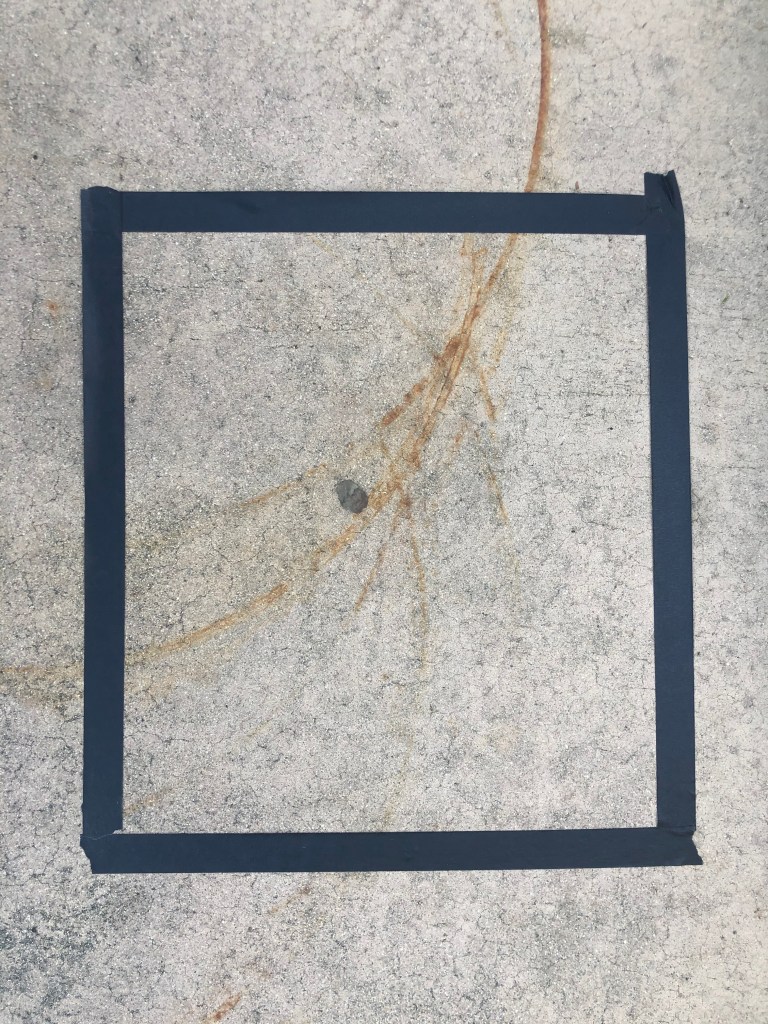
Formal Qualities
The object that we focused on was small; it was a specific detail of the many different circular shapes that appeared throughout different time periods. My art is monochrome, mostly consisting of a rust orange color with varying levels of intensity. The art is relatively smooth, other than some little cracks that formed on the pavement over time. It is simple and focuses on a distinct area of the circular rust marks; this is where most of the interactions between the various lines occur.
Aesthetics
This art evokes the realization that simple things, like a trash can, are able to leave a lasting impression without meaning to do so. Even as more rust lines form, the oldest ones are still visible and remain an important part of the pavement. Normally, the rust orange color is associated with a negative, dirty feeling because it is not a part of metal that we enjoy seeing.
Content
My art represents the impact that something, even as simple as trash, can have on its environment. The rust from a nearby trash can is able to form complex lines and patterns, which shows the effect time has put on it. The rust was a chemical reaction that the trash can did not purposefully mean to enact, but it happened anyways. My art is meant to put things in perspective; although we may sometimes feel lost and unimportant in this big world, our actions do have consequences and effect others around us. Although this is a disturbing reality, it really highlights the impact of even the smallest of events.
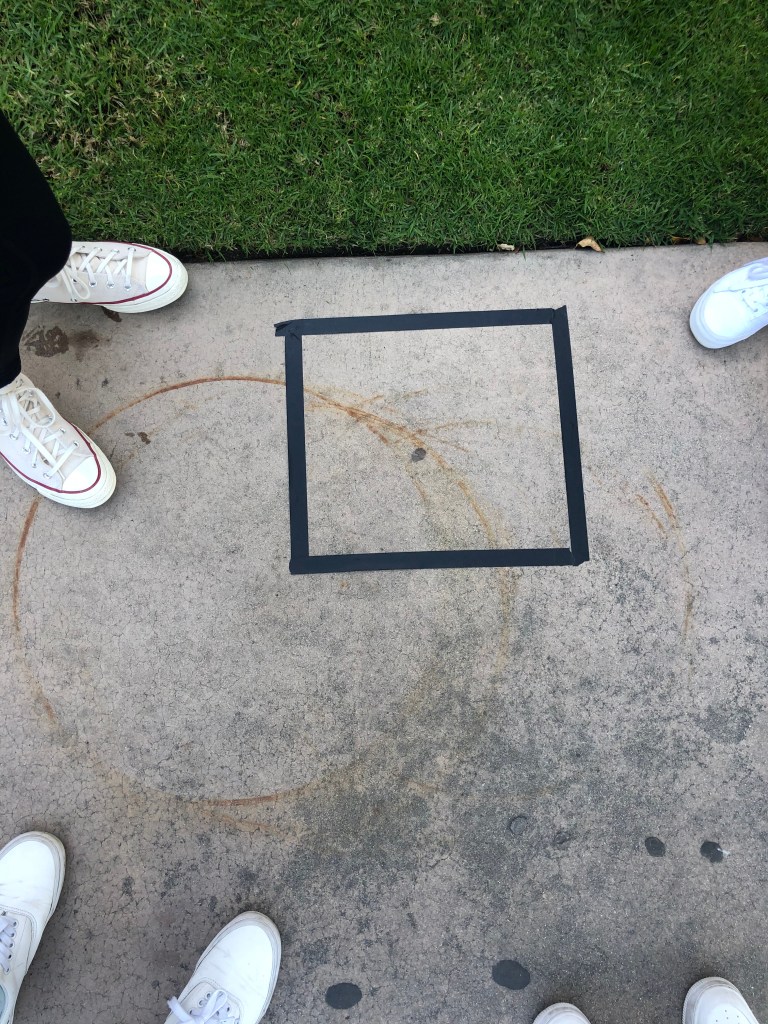
My Art was not Art before I put a rectangle on it because our eyes do not naturally look to see the complexity that was formed by the lines. People tend to look at the overall picture of the big circle of rust and look to the trashcan on the side to make a connection, ultimately forgetting they had even thought about it. But, after using the tape to focus in on the intense parts of the rust, it is much clearer to make a connection towards why this is Art.
My Art will most likely not be considered Art once the rectangle is gone because many people will just see the big circle of rust and associate it with being unwanted residue from the trash can again. Most people will not stop to think about why the rust is there or what the rust can teach us. The location of the Art is also not somewhere that a person will normally stop to look around.
Art does not solely reside in the body of the object. I believe that the intention of the person making the object influences whether that object is considered Art or not Art. If the object has no meaning to the creator, then it is hard to view the object as art. But, if the creator is able to provide some background and intention towards their creation, then it is considered art to the viewers too.
Art is a form of expression, which is not always found on an object. Dancing or Maintenance Art (which we did last week) are both actions and equally considered works of art, despite not being objects. They are more commonly considered Performing Arts.
I believe that Art is subjective and can depend on either the viewer or the object itself. Each person has their own preference of what they consider to be Art or not Art, which can differ from the next person and so on. The viewers definitely have a say of how popular or well-known a specific art is, but that is not the only place art resides. The creator can also indicate if their object is art because they are the ones that made it, but the viewer has the option of taking the artists’ words into consideration.
 Julliane's Art 110